
TL;DR
If your SEO rankings are improving but your organic traffic is falling, you’re experiencing the SEO reporting paradox. Google AI Overviews and zero-click searches mean that ranking well no longer guarantees clicks. Most SA businesses are still measuring the wrong things. This post explains why it’s happening, what it means for your reporting, and which metrics actually reflect commercial performance in 2026.
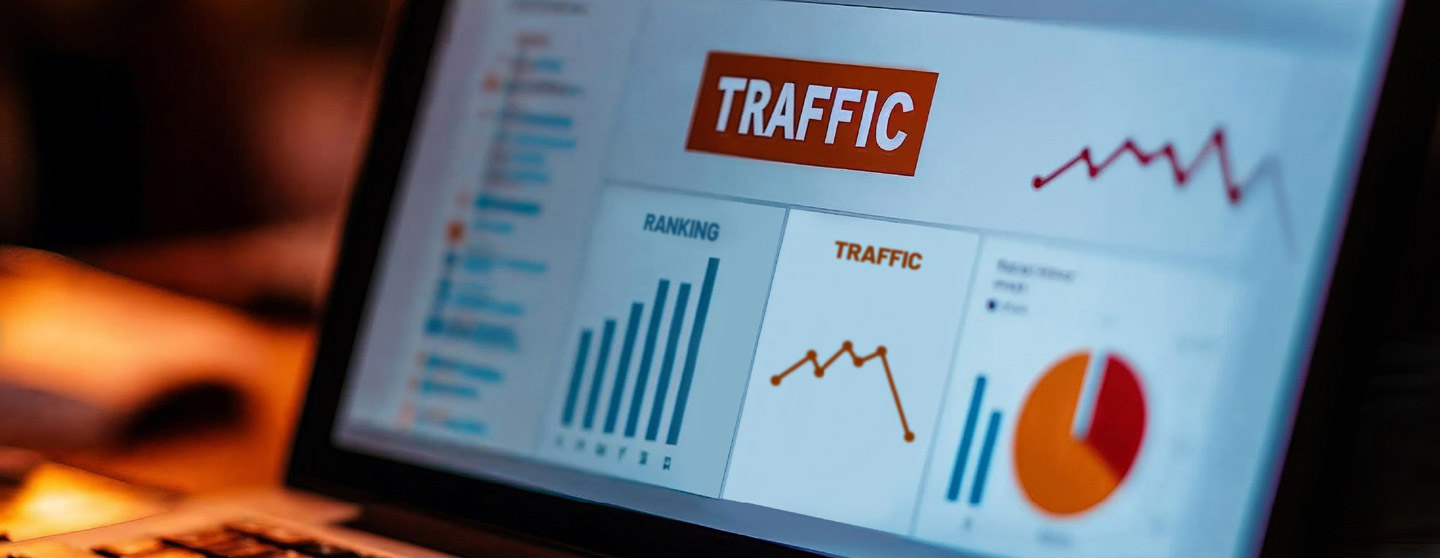
You’re looking at this month’s SEO report, and something doesn’t add up. Rankings are moving in the right direction. Position improvements across key terms. More keywords in the top 10. All the signals that used to mean good news.
But the traffic numbers are going the other way. Fewer sessions. Lower click-through rates. Less organic visibility in Google Analytics despite the better rankings.
This is not a technical error. It’s the SEO reporting paradox, and it’s affecting South African businesses across every category from retail and financial services to healthcare and professional services. Understanding what’s causing it is the first step to measuring what actually matters.
What Is the SEO Reporting Paradox?
The SEO reporting paradox is the widening gap between ranking performance and traffic performance. A page can rank in position 1 on Google and still receive significantly fewer clicks than it did two years ago, because Google is now answering users’ questions before they click on anything. Rankings measure position. Traffic measures behaviour. In 2026, these two metrics no longer move together. |
Researchers at Bain tracked this trend and found that 60% of all Google searches now end without a single click to an external website. That figure has been climbing for years, driven by featured snippets, knowledge panels, and direct answer boxes. Now, Google AI Overviews have accelerated it dramatically.
The research group at Seer Interactive tracked 3,119 informational queries across 42 organisations and found that organic click-through rate dropped 61% year on year for queries where AI Overviews appear. Paid CTR dropped 68%. Those aren’t gradual declines. They’re structural breaks in how search works.
What Google AI Overviews Are Actually Doing to Your Traffic
Google AI Overviews (previously called Search Generative Experience) now appear in 25.8% of all US searches as of January 2026, with informational queries triggering them 39.4% of the time. South Africa’s rollout follows US patterns with some lag, but the direction is the same.
The Pew Research Center study across 68,000 real queries found a 46.7% relative decline in click rates when AI Overviews are present: 8% with an AI Overview versus 15% without one. That means a page that used to attract 1,500 clicks a month from a query might now attract around 800 from the same query, at the same ranking position.
The impact is not uniform. E-commerce queries have a 4% AI Overview trigger rate. B2B technology queries trigger them 70% of the time. Healthcare and medical content sits at 51.6%. If your business operates in a category with high informational search volume, the impact is severe. If you’re predominantly transactional, it’s much less pronounced.
And then there’s AI Mode. When Google serves AI Mode rather than standard results, 93% of those searches end without a click. That’s not a rounding error. It’s the future of search for a large portion of queries.
So Does Ranking on Page One Still Matter?
Yes, but not for the same reasons as before. Research from AirOps confirms that a page ranking at position 1 has a 58% chance of being cited by ChatGPT. By position 10, that drops to 14%. Ranking well in traditional search still underpins AI visibility. The difference is that a strong ranking no longer reliably produces clicks the way it used to. The goal has shifted from ranking for traffic to ranking for citation. |
The relationship between traditional rankings and AI citation is strongest in Google AI Overviews, where 76.1% of cited URLs also rank in the top 10. For ChatGPT and other LLM-based platforms, the correlation is weaker. An Ahrefs study found that only 43.2% of pages cited by ChatGPT rank in the Google top 10, meaning AI platforms draw from a broader source pool than Google does.
This creates a new opportunity. If you structure your content correctly, you can earn AI citations even without top-3 rankings. And brands cited in AI Overviews earn 35% more organic clicks than those not cited, which means citation is now itself a traffic recovery strategy.
The bottom line is that you still need strong SEO foundations. But those foundations now serve a different purpose: they earn you the authority that drives AI citation, not just the position that used to drive clicks.
What Should SA Businesses Be Measuring Instead?
In 2026, a complete SEO report needs to track ranking data alongside CTR trends by keyword cluster, AI Overview citation rate, branded search volume growth, and conversions from organic traffic. Traffic alone is no longer sufficient as a performance indicator. The metrics that matter are the ones that connect visibility to commercial outcome: leads, conversions, and revenue, regardless of whether a click happened. |
Here is what a complete visibility report for a South African business needs to include in 2026:
- Rankings by keyword cluster: still essential, but now as an input to citation potential, not a proxy for traffic
- CTR trends by keyword: are your high-ranking pages actually converting impressions to clicks? Which queries have AI Overviews suppressing CTR?
- AI Overview impression share: are your pages appearing in AI Overviews? Is your brand being cited or just appearing in the source links below?
- Branded search volume: brand searches often increase when a business appears in AI answers, even when direct clicks don’t happen. This is a leading indicator of brand awareness from AI exposure
- Conversions from organic: sessions matter less than what those sessions actually do. Revenue, lead form completions, phone calls
- AI platform share of voice: how often does your brand appear when relevant queries are entered into ChatGPT, Perplexity, and Google AI Overviews?
A monthly SEO performance review that only tracks rankings and sessions is now an incomplete picture. Reporting needs to evolve alongside the search landscape.
The Content Strategy Shift That Protects SA Brands
Not all content is equally affected. Transactional and commercial-intent keywords, the ones where users are ready to buy, have much lower AI Overview trigger rates than informational queries. E-commerce queries trigger AI Overviews just 4% of the time. Real estate and local queries are similarly protected, because AI cannot satisfy location-specific or action-specific intent with a text summary.
The practical implication is that South African businesses with strong informational content portfolios, the “how-to” guides, “what is” explainers, and educational articles, need to rethink what role that content serves. It still matters for brand visibility and AI citation. But it’s no longer a reliable traffic source the way it once was.
What converts in 2026 is a hybrid approach. Maintain informational content with answer capsule structure and FAQ schema to earn AI citation and brand exposure. Prioritise commercial and transactional pages for traffic and conversion. And build digital strategy that targets the full visibility picture, not just the ranking column.
For a deeper look at where your site’s content strategy sits today, a digital audit can map which pages are most exposed to AI Overview cannibalisation and which represent the strongest commercial opportunities going forward.
How Do You Identify Whether AI Overviews Are Affecting Your Traffic?
The fastest diagnostic is a cross-reference between Google Search Console and your rankings tool. Find keywords where your impressions are high and stable but CTR has dropped in the last 12 months. Then manually check those queries in Google to see whether AI Overviews appear. If they do, that’s your cannibalisation signal. The fix starts with restructuring those pages to earn citation rather than just ranking. |
A structured diagnostic process for South African businesses:
- Pull Google Search Console data for the past 12 months and identify keywords with declining CTR despite stable or improving position
- Cross-reference those keywords against your ranking tool to confirm position is not the cause of the CTR drop
- Manually search the top 20-30 affected queries in Google and check whether AI Overviews or AI Mode is appearing
- Flag the pages affected and prioritise them for content restructuring: add answer capsules, FAQ sections, and schema markup
- Track the change monthly using Search Console CTR data and AI Overview citation monitoring
Most major SEO platforms now include AI Overview tracking in their SERP feature reports. If your current reporting setup doesn’t include this, that’s the first gap to close.
Measure What Matters Now, Not What Worked Then
The disconnect between rankings and traffic isn’t going away. If anything, it’ll get more pronounced as AI search continues to expand. Continuing to report purely on rankings and sessions is like navigating by a map that’s two years out of date.
Three things to act on. First: audit your top traffic pages against AI Overview exposure and identify where CTR is being suppressed. Second: add AI citation metrics to your monthly reporting alongside traditional SEO data. Third: restructure your highest-value pages to earn citation, not just position.
If your reports are telling you rankings are up but something doesn’t feel right, trust the feeling. The search landscape has changed, and your measurement framework needs to change with it. Speak to the iLEAD et al team about an SEO and visibility audit, and we’ll show you exactly what’s happening to your traffic and how to recover it.
Frequently Asked Questions
Why are my SEO rankings improving but my organic traffic is declining?
This is the SEO reporting paradox driven by zero-click searches and Google AI Overviews. Your pages can rank well and still receive fewer clicks because Google answers users’ questions before they visit any website.
What is a zero-click search?
A zero-click search is a Google query that ends without the user clicking on any external website. They get the information directly from the results page via an AI Overview, featured snippet, or knowledge panel.
What metrics should SEO reports include in 2026?
A complete report in 2026 needs: ranking data by keyword cluster, CTR trends by query type, AI Overview impression share and citation rate, branded search volume growth, conversions from organic traffic, and share of voice in AI platforms.
Does being ranked first on Google still matter in 2026?
Yes. A page at position 1 has a 58% chance of being cited by ChatGPT, compared to 14% at position 10. Traditional rankings still underpin AI visibility. The difference is that position 1 no longer reliably produces clicks at the rate it once did. The goal is to rank well and earn citation.
What can a South African business do to protect its organic traffic in 2026?
Focus content strategy on transactional and commercial-intent keywords, which have significantly lower AI Overview trigger rates. Add answer capsules and FAQ schema markup to existing high-value pages. Track brand mentions in AI platforms monthly. And ensure your ongoing SEO programme includes AI Overview citation tracking as a core reporting metric.