

The marketing landscape is undergoing a profound transformation. Artificial intelligence is reshaping how we reach, understand, and serve audiences. From automated campaign optimisation to personalised, real-time experiences, AI is becoming central to how marketing delivers value. Insights from Google suggest that AI-powered tools can significantly improve performance across key business metrics. Yet the most effective implementations are those that strengthen human insight rather than replace it.
This shift brings both opportunity and complexity. As AI expands what marketers can do, it also raises expectations around relevance, responsiveness, and transparency. To remain effective, we need to rethink how we approach audience strategy, not just in terms of tools and tactics, but in how we understand and respond to changing audience needs.
To do this well, we must lead in four key areas. These include elevating data quality, adapting to changing platforms, earning attention in fragmented environments, and embedding smarter, forward-looking measurement strategies.
The Effectiveness of AI Depends on Data Quality
At Google’s Marketing Live event, Gaurav Bhaya summarised a core truth for digital marketers: “Your data is your competitive edge.”
That edge begins with first-party data, information customers willingly share through trusted, privacy-safe interactions and untapped potential from actions taken on our websites, form submissions, and those generated through CRM systems.
When combined with AI-powered tools, first-party data transforms into a strategic asset. It allows us to identify high-value customers, refine targeting strategies, and personalise experiences more meaningfully. The result is stronger campaign performance, increased efficiency, and more relevant brand interactions.
Tools like Google’s Smart Bidding, Performance Max and Demand Gen campaigns adapt dynamically using behavioural signals. When paired with Customer Match, which uses first-party data to build custom audience segments, these tools become even more powerful, helping us connect with the right people at the right time based on real behaviour.
We are also seeing innovation in platforms like Microsoft, where LinkedIn and Azure combine professional context with AI capabilities to enable more predictive and personalised B2B campaigns.
The convergence of structured data and adaptive intelligence is no longer optional. It is a prerequisite to campaign relevance in the AI age.
AI Accelerates the Expansion of New Media Channels
AI is not only reshaping how campaigns are delivered. It is also changing where and why audiences engage. Today’s customers move fluidly between platforms, each serving different emotional and functional needs. To keep up, we must develop nuanced, channel-specific strategies while ensuring consistency in our brand presence and value.
Nowhere is this clearer than in how people search. What used to be a keyword-driven activity is now increasingly conversational. People expect search engines to respond with solutions, expert advice and even emotionally in-tune. In response, Google is testing AI-generated overviews that summarise results instantly, changing how visibility is earned.
From SEO to AEO: Prioritising Answers Over Keywords
This shift is giving rise to Answer Engine Optimisation. While traditional SEO prioritised ranking factors, AEO focuses on delivering accurate, useful responses that solve for intent.
As Ahrefs highlights, AI overviews are already influencing how search results are structured and which content is seen. In this landscape, our focus must shift from visibility to value, from being ranked to being genuinely helpful.
E-E-A-T and the Growing Role of Brand
Google’s E-E-A-T framework – Experience, Expertise, Authoritativeness, and Trustworthiness – continues to shape content quality. Originally designed to guide human evaluators, it now informs how content is surfaced by AI systems.
As these systems curate more content, brand recognition becomes an increasingly important signal. Known, consistent, and credible brands are more likely to appear in summarised results or AI-curated experiences.
To stay competitive, we must invest in both content quality and brand visibility. Audience strategy in the AI age is not just about ranking well. It is about being remembered, trusted, and chosen.

People’s Attention Spans for Ads Are Shrinking
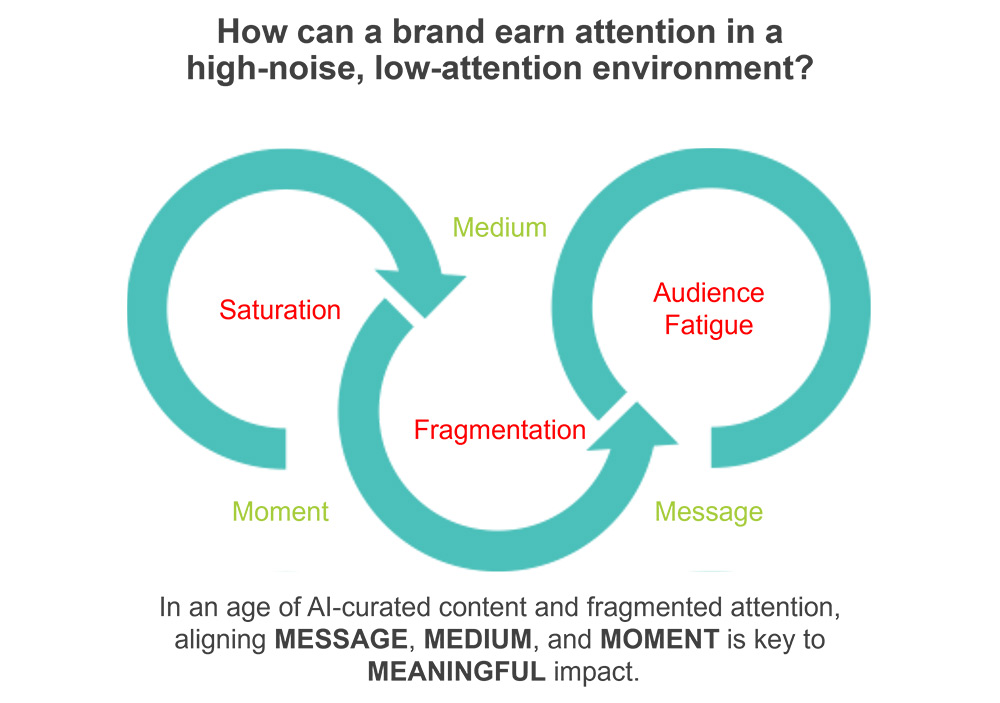
Attention has become one of the most valuable and scarce resources in digital marketing. People scroll, skip, and swipe quickly, and they only engage when something resonates deeply or helps them in the moment.
Earning attention today starts with deeper audience understanding. It means listening more closely to what people are feeling, what challenges they face, and what motivates action. We need to go beyond to uncover the emotional context behind behaviour.
Equally important is matching content to platform purpose. Instagram is about discovery and inspiration. LinkedIn centres on professional growth and connecting with like-minded peer communities. YouTube delivers both escapism and long-form entertainment, as well as learning and staying on top of the latest trends. The more our content complements platform behaviour, the more likely it is to sustain attention and engage.
In this landscape, empathy becomes a strategic advantage. The brands that earn attention are the ones that design for people, not just placements.
Measurement That Moves Strategy Forward
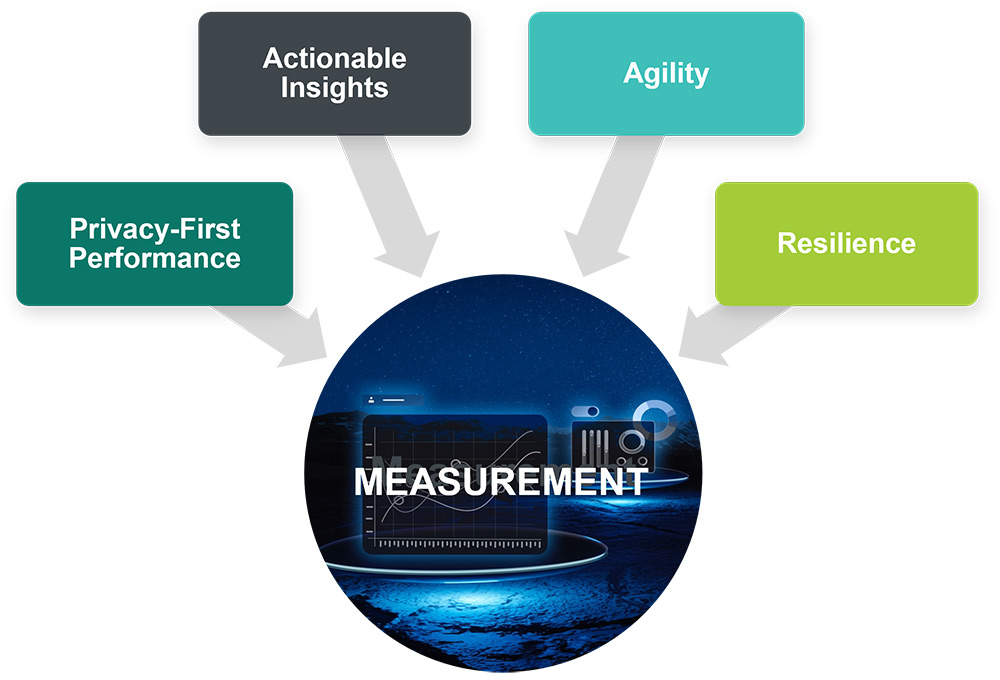
Measurement is no longer a post-campaign checklist. It is a strategic tool that shapes how we optimise and grow. Every audience strategy should begin with a measurement framework that aligns short-term performance with long-term brand health.
We need to track signals across three-time horizons. In the immediate term, we look at click-through rates, cost per acquisition and conversion volume. In the short term, we watch branded search trends, engagement depth and social sentiment. In the long term, we focus on brand equity, customer lifetime value and market share.
AI enhances this process by making measurement more adaptive and forward-looking. It allows us to forecast behaviour, identify emerging patterns and optimise in real time, especially when connected through strong first-party data.
Measurement in the AI age is not longer just about what happened. It is about what is happening and what is likely to happen next.
Customer-Centricity Your Compass To A Competitive Advantage
Commercially successful brands recognise that AI-expanded media ecosystems create new opportunities by giving them access to more advanced tools to collect and interpret customer data, and by enabling them to readily respond to their customers’ needs.
To stay relevant, they invest time and resources into listening to and analysing what their audiences truly need. By combining first-party data with behavioural and channel insights, they are able to build a more complete understanding of the people they serve. This deeper view enables them to deliver offers and communications that feel more personally relevant.
Relevance matters more than ever, as time-poor and attention-starved audiences now expect brands to create experiences that reflect their context and expectations. This is where AI becomes indispensable, helping brands scale personalisation with speed, precision and consistency.
Another advantage of a customer-centric strategy is that it is shaped by the intent to create meaningful value in people’s lives. Anchored in their brand essence, which serves as a compass for consistency and coherence, successful brands regularly revisit and refine core elements such as their customer promise to stay in tune with the cultural and commercial realities their audiences are living through. This commitment helps them remain trusted, resonant and relevant in an environment that is constantly shifting.
Kantar’s long-standing research shows that meaningfully different brands are consistently preferred. They serve as trusted beacons through increasingly complex purchasing decisions. The same research also highlights a strong correlation between brand equity and resilience, especially during times of crisis.
Shaping Audience Strategy for What’s Next
We are reworking audience strategy to match the pace of changing behaviours, shifting platforms and smarter systems. In a world where relevance is always in flux, customer-centricity remains our compass, guiding strategies that are fast, focused and firmly future-facing.
FAQs About Audience Strategy:
What is an AI audience strategy?
An AI audience strategy uses artificial intelligence to analyse data, predict behaviour and personalise marketing based on customer needs and preferences.
How does AI improve personalised marketing?
AI helps marketers use first-party data to tailor content, offers and experiences to individual users, improving relevance and performance across channels.
Why is first-party data important for AI marketing?
First-party data offers direct insights into customer actions and preferences, allowing for more accurate targeting, segmentation, and real-time personalisation.
How can brands prepare for Google’s AI overviews?
By focusing on content that directly answers questions, demonstrates expertise and builds trust through consistent branding, brands are more likely to be included in AI-generated summaries.