

Our clients often tell us something that sounds almost like a confession: “We see the brand-building frameworks and approaches taken by global brands, and while all of this is great, we are not sure how we, as a small-to-medium business with limited budgets and resources, can start executing our own strategy.”
It’s a fair concern. Most case studies focus on global corporations with massive budgets and decades of dominance. Smaller enterprises operate in a different reality. Every marketing decision needs to earn its place.
The good news is that modern brand building is no longer about who spends the most money. It is about competing intelligently, projecting a clear value proposition, understanding audience behaviour deeply, uncovering overlooked growth opportunities, and strategically combining brand building with sales activations.
In reality, many small and medium-sized businesses possess several critical advantages that larger organisations struggle to replicate: agility, authenticity, rapid execution, and close customer relationships. In the age of AI-driven discovery, these qualities are becoming some of a business’s most valuable assets.
So, What Is Brand Building Really?
A brand is the identity a business intentionally creates, as well as the meaning people associate with that business over time. It is the emotional response people experience when they hear your name, see your content, use your product, or recommend your services.
Consider the automotive industry as a classic psychological example. When consumers think of BMW, they immediately evoke the visceral thrill of performance and driving pleasure. When they think of Volvo, the immediate association is family safety and structural reliability. Neither brand attempts to appeal to everyone; instead, both occupy a distinct, uncompromised emotional territory. That is the true purpose of branding.
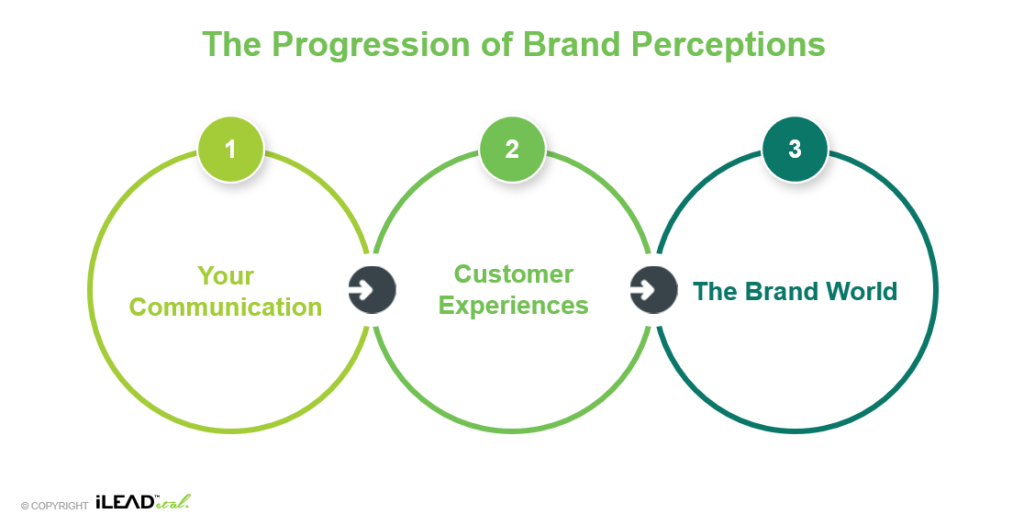
Branding may start with a product’s functional features, but it soon grows into something deeper: trust, emotional memory, reputation, and identity. Over time, these experiences create a “brand world”, the ecosystem of perceptions customers form through real-world usage, independent reviews, and online conversations.
People rarely remember product specifications; they remember how a brand made them feel. That emotional memory drives top-of-mind recall, preference, and future purchasing decisions.
Why Branding is Vital for Small Businesses
Many growing businesses view branding as an expensive luxury reserved for corporate giants. For smaller enterprises, branding can help compensate for limited budgets and lower market visibility.
A resilient brand identity helps smaller businesses gain market traction faster by turning their first loyal buyers into advocates, then using that trust to reach new customer segments and reduce buyer hesitation.
Smaller businesses possess unique strategic advantages that large corporations spend millions trying to artificially mimic:
- Agility Over Bureaucracy
Large organisations move slowly. Deep layers of administrative approvals, rigid legal compliance, and internal corporate silos can delay even the simplest marketing campaigns for months. Smaller businesses, by contrast, can test ideas instantly, adapt to real-time market feedback, and pivot to capitalise on cultural shifts overnight.
- The Resourcefulness of Constraints
There is a common misconception in business that a massive budget automatically guarantees a strong brand. Tight budgets actually force sharper, more creative strategic thinking, demanding a clear value proposition, absolute clarity of purpose, and marketing ideas that are inherently compelling enough for people to share organically.
A powerful example is the meteoric rise of South African fashion label GALXBOY. Operating in a saturated retail sector dominated by international giants, they built immense desirability by anchoring their brand in local culture and community engagement.
- Proximity to Purpose and Community
Smaller organisations remain intimately connected to their founder’s story, customer realities, and true raison d’être. This unmanufactured authenticity is a highly defendable competitive advantage.
Homegrown challenger brands like Pineapple demonstrate how solving a personal frustration with an outdated market can spark national momentum. By reimagining insurance as a transparent, community-driven ecosystem, they prove that modern consumers want more than functionality, instead they are buying into brands with shared values.
Smaller brands are naturally positioned to capture these emotional connections because they live on the front lines alongside their customers.
The AI Frontier: How Brand Discovery is Shifting
Consumer discovery is shifting beyond traditional keyword search. Today, users often ask conversational AI platforms like ChatGPT or Gemini for direct product recommendations.
This shift changes digital visibility. Businesses still compete for traditional search performance, but they also need enough trust and contextual authority to appear in AI-generated recommendations.
As generative AI makes it easier for competitors to copy software features or service offerings, people lean towards what feels familiar. A trusted brand name becomes a shortcut for confidence and quicker decision-making.
Digitally-savvy customers move across social media, short-form video, streaming platforms and creator-generated content. They consult more than one channel before making a decision, so content needs to be built for the platform where it appears.
How AI Platforms Select Brands to Recommend
While the underlying machine learning algorithms are incredibly complex, the digital signals they evaluate to determine a brand’s authority are highly predictable.
Conversational AI models continuously screen the web for signals such as:
- Brand Mentions & Share of Voice: The frequency with which your brand name is naturally discussed across the digital web relative to your competitors.
- Sentiment & Review Authority: The volume of verified, positive, real-world customer testimonials across independent platforms and forums.
- Contextual Association: How consistently your brand is mapped to specific solutions, keywords, and expert industry topics.
- Direct Search Volume: The number of users explicitly typing your exact brand name into search queries, signalling genuine human demand.
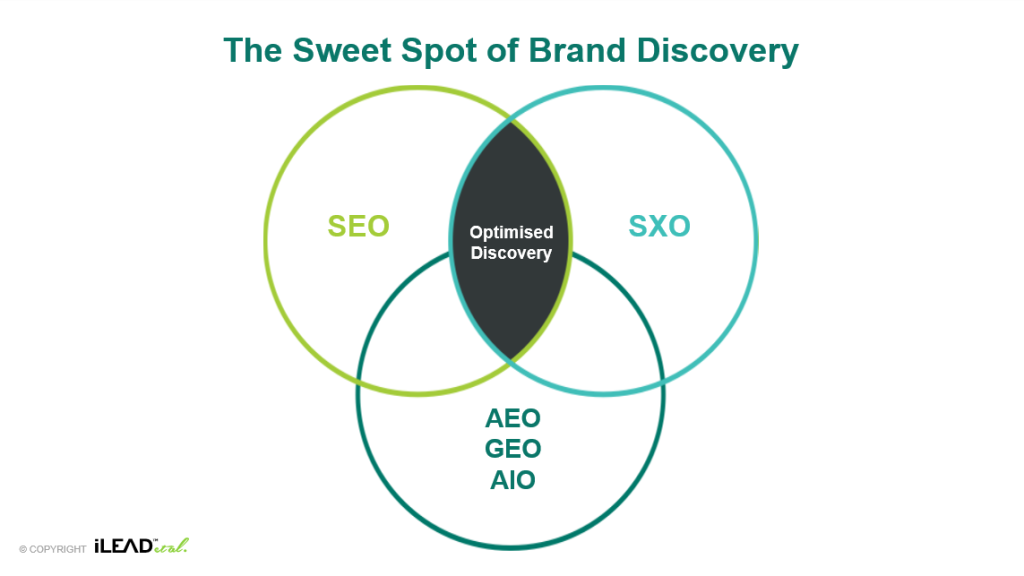
This data pipeline is where AEO (Answer Engine Optimisation), GEO (Generative Engine Optimisation), and AIO (AI Optimisation) become essential. While traditional SEO optimises for algorithms, SXO (Search Experience Optimisation) bridges the gap by optimising for the human experience on your site. Together, they form a baseline of digital trust signals that allow AI engines to confidently cite, credit, and recommend your business.
To future-proof your digital footprint for these systems, ongoing execution should prioritise authoritative content, clear service information, consistent messaging across channels and authentic reviews within active digital communities.
Beyond AI, digitally-savvy customers live across multiple platforms, including social, short video, streaming and creator-generated content. They consult more than one channel before taking action, which means content should be created for those platforms rather than copied across them.
The Compounding Timeline of Brand Value
A question we are frequently asked by growing businesses is: “How long does branding actually take to deliver a return?”
While brand building is a long-term strategic asset that compounds exponentially over time, the truth is that you do not have to wait years to see measurable business value.
The impact of a structured strategy manifests across a clear, modular timeline:
Short-Term Impact
- Internal Alignment: It instantly galvanises your internal team, empowering employees to understand the company vision and act as your primary brand advocates.
- Engagement Quality: You will observe immediate spikes in social media engagement, click-through rates, and customer review volume.
- Conversion Optimisation: Clearer positioning refines your inbound lead quality, noticeably reducing friction in your sales funnel.
Medium-Term Impact
- Brand Recall: Your target market begins to naturally associate your brand name with your specific industry niche.
- Reaching New Customers: You unlock the full power of integrated marketing communications by expanding your owned and paid media channels. Moving deliberately beyond initial word-of-mouth recommendations into targeted paid acquisition becomes your crucial lever for sustainable, scalable audience growth.
- Customer Retention: Repeat purchase rates rise as customers transition from casual buyers into loyal brand community members.
Long-Term Impact
- Pricing Power: A strong brand commands a premium price point, allowing you to insulate your profit margins from low-cost competitors.
- Reduced Acquisition Costs: True customer pull minimises the ongoing advertising capital required to close a deal.
- Market Defensibility: Your business gains long-term equity and structural resilience, allowing you to withstand macroeconomic shifts and confidently scale into entirely new product categories.
[Strong Brand Meaning] ➔ [Higher Customer Pull] ➔ [Lower Cost of Sale]
Where to Start: A Practical Roadmap
For a growing business, building a resilient brand starts with encapsulating your brand essence – your “North Star” or “Golden Thread.” This model begins with your core competence, defining it through your values, your vision, and the emotional transformation your customers experience.
- Define Your Brand Essence: Clarify what your business stands for, who it serves, and why it exists beyond profit. This core purpose acts as your operational guide.
- Uncover Deep Audience Drivers: Look past basic demographics. Identify your target market’s genuine frustrations, hidden aspirations, and core identity drivers.
- Enforce Absolute Consistency: Ensure your visuals, tone, content, and user experience match across all touchpoints. This ensures top-of-mind human recall while helping AI models trust and cite your business.
- Publish Authority-Driven Content: Build your presence through educational value, authentic storytelling, and legitimate thought leadership. High-value content is infinitely easier for both humans and AI to trust.
- Strengthen Digital Trust Signals: Intentionally collect verified reviews, optimise website performance, and maintain an active presence on the digital platforms where your customers converse.
As artificial intelligence makes it easier to produce content and imitate competitor messaging, genuine brand meaning becomes a stronger defensive asset. The businesses that build the strongest position in the next decade will be the ones people recognise, trust, remember and actively choose.
For more insight into strategic brand building, AI visibility, customer relevance and long-term digital growth, explore our insights in the iLEAD et al Digital Newsroom, browse our case studies to see how we have supported businesses on their growth journeys, or connect directly with the iLEAD et al strategic team today.
As Head of Strategy at iLEAD et al, Kristina Krivak focuses on how brand strategy and technology shape business growth. She helps turn audience insights into marketing strategies that support measurable results.